Heating & Cooling SEO in Washington, DC
Washington's 6.4 million metro residents search for HVAC help online first — and 75% call only the top 3 results. With organic CPL as low as $15-40 (vs. $150 for Google Ads), SEO is the highest-ROI growth channel for heating and cooling companies in DC.
By Contractor Bear Team • March 2026
Get Your Free Washington Heating & Cooling Audit
See exactly where you're losing leads to your top 3 heating & cooling competitors in Washington. No sales call required.
Why SEO Is the #1 Growth Channel for Washington HVAC Companies
Top 8 Local SEO Ranking Factors for Heating & Cooling
What actually moves the needle for heating & cooling companies in Washington.
Google Business Profile
The Google Map Pack appears above organic results for nearly every HVAC search in Washington DC. With 25% of homeowners calling directly from GBP listings and CPL as low as $10-25, owning a Map Pack position is the single highest-ROI real estate in local search.
Our approach: We fully build out your GBP with every HVAC service category, accurate service areas covering DC, Arlington, Alexandria, Bethesda, and surrounding suburbs, geo-tagged photos of your trucks and completed jobs, Q&A sections seeded with common HVAC questions, and weekly Google Posts timed to seasonal demand spikes.
On-Page SEO
Google reads your page content to determine relevance for queries like 'AC installation Washington DC' or 'heat pump repair Northern Virginia.' Weak or generic on-page signals mean you will never rank for the high-value terms that drive emergency calls.
Our approach: We conduct full keyword research specific to Washington HVAC search demand, then optimize every title tag, H1/H2 structure, meta description, and body copy. Each service page (AC repair, furnace installation, heat pump, ductwork) gets its own dedicated, optimized page targeting distinct keyword clusters — no single page trying to rank for everything.
Reviews and Ratings
Most Washington homeowners read reviews before choosing an HVAC company. Google also uses review quantity, recency, and sentiment as direct Map Pack ranking signals. A company with 12 reviews will not outrank a competitor with 200 — regardless of other factors.
Our approach: We implement an automated post-job review request system via text and email, timed to send when customer satisfaction is highest (within 2 hours of job completion). We also create templated responses to all reviews — positive and negative — which signals engagement to Google and converts skeptical prospects reading your profile.
Local Citations
Google cross-references your business name, address, and phone number (NAP) across hundreds of directories to verify legitimacy. Inconsistent or missing citations create trust gaps that suppress rankings — especially damaging in a competitive market like Washington DC.
Our approach: We audit and correct your NAP data across 80+ directories including Yelp, Angi, Houzz, BBB, Nextdoor, and HVAC-specific platforms. We also build structured citations in DC-specific directories and local Chamber of Commerce listings to reinforce geographic relevance.
Mobile Experience
The majority of emergency HVAC searches in Washington happen on mobile — someone's AC dies at 9pm and they grab their phone. A slow or poorly-formatted mobile site triggers an immediate back-button click, signaling poor user experience to Google and costing you the lead.
Our approach: We audit Core Web Vitals (LCP, CLS, FID) and resolve performance bottlenecks — image optimization, server response time, render-blocking resources. Click-to-call buttons are prominently placed above the fold. Mobile page speed targets are set at under 2.5 seconds to meet Google's performance benchmarks.
Content Quality
Google's algorithm increasingly rewards pages that demonstrate genuine expertise in their subject. Thin, templated HVAC pages rank poorly. Detailed content covering DC-specific topics — heat pump efficiency in humid subtropical climates, PEPCO utility rebates, DC building permit requirements — earns rankings that generic content cannot.
Our approach: We build a content architecture of service pages, neighborhood landing pages, and educational blog posts targeting informational queries that capture homeowners earlier in the decision cycle. Content is written by HVAC-knowledgeable editors, not AI-spun filler, with accurate technical details and local references that signal authentic expertise.
Backlinks
Links from authoritative websites act as votes of confidence in Google's algorithm. HVAC companies with backlinks from local news sites, industry associations (ACCA, PHCC), suppliers, and neighborhood blogs rank significantly higher than companies with identical on-page optimization but no inbound links.
Our approach: We execute a local link-building strategy targeting DC-area media, neighborhood organizations, real estate and property management companies, and home improvement publishers. We also pursue manufacturer and supplier directory listings (Carrier, Lennox, Trane dealer pages) which carry strong domain authority in the HVAC vertical.
Technical SEO
Even perfectly written content cannot rank if Google cannot crawl and index your site efficiently. Technical issues — broken links, duplicate content, missing schema markup, slow server response — silently suppress rankings across every page on your domain.
Our approach: We conduct a full technical audit covering crawlability, XML sitemap accuracy, canonical tags, structured data markup (LocalBusiness and Service schema), HTTPS implementation, and page speed. We implement HVAC-specific schema that makes your reviews, service areas, and business hours eligible for rich snippet display in search results.
SEO vs Paid Ads for Heating & Cooling Companies
| Factor | SEO | Google Ads | Facebook Ads |
|---|---|---|---|
| Cost Per Lead | $15-40 | $45-150 | $25-80 |
| Close Rate | 20-25% | 8-12% | 5-8% |
| Time to Results | 3-6 months | Immediate | 1-2 weeks |
| Long-term Value | Compounds over time | Stops when you stop paying | Stops when you stop paying |
| Trust Level | High (earned placement) | Medium (paid label) | Low (interruptive) |
| Lead Quality | High intent | High intent | Lower intent |
Step-by-Step Local SEO for Washington HVAC Companies
Claim & Optimize Your Google Business Profile
Your GBP is the single most important SEO asset for a Washington DC heating and cooling company. Start by claiming and verifying your listing, then populate every available field: business categories (use 'HVAC Contractor' as primary, add 'Air Conditioning Contractor' and 'Heating Contractor' as secondaries), service areas covering DC proper and surrounding suburbs like Bethesda, Silver Spring, Arlington, and Alexandria, and a keyword-rich business description that naturally includes your top services. Upload a minimum of 20 geo-tagged photos showing your trucks, technicians, and completed installs. Set up the Services section with individual listings for AC repair, furnace installation, heat pump services, and ductwork — each with its own description. Post weekly updates timed to seasonal HVAC demand to signal an active, engaged business to Google's ranking algorithm.
Build Local Citations Across DC-Area Directories
Citations — consistent listings of your business name, address, and phone number across the web — are a foundational trust signal for local rankings. For a Washington DC HVAC company, this means ensuring perfect NAP consistency across Yelp, Angi, Houzz, HomeAdvisor, BBB, Nextdoor, and at least 60 additional general and HVAC-specific directories. Beyond national platforms, prioritize DC-specific directories: the DC Chamber of Commerce, Northern Virginia Association of Realtors vendor directories, and Montgomery County business listings carry geographic relevance signals that national directories cannot replicate. Run a citation audit first to find and correct any inconsistencies — even minor differences like 'Suite' vs 'Ste' or old phone numbers can create conflicting signals that suppress your Map Pack rankings. Consistency across every citation is non-negotiable.
Optimize Service Pages with Washington-Specific Keywords
Generic HVAC website content will not rank in a competitive market like Washington DC. Each core service needs its own dedicated page optimized for specific local search queries. Your AC repair page should target 'AC repair Washington DC,' 'air conditioner not working DC,' and related emergency variations. Your furnace page targets 'furnace repair Washington DC' and 'heating repair Northern Virginia.' Each page needs a locally-relevant H1, city-specific content addressing DC homeowner pain points (humid subtropical climate, aging row house ductwork, PEPCO utility rebate programs), structured data markup, and a clear call to action. Title tags follow the pattern 'Service + City + Brand' and stay under 60 characters. Meta descriptions include target keywords and a hook specific to Washington homeowners — mention emergency availability, DC licensing, or local tenure.
Generate a Steady Stream of Five-Star Reviews
Washington homeowners are sophisticated consumers — 93% read reviews before booking a contractor, and they read them critically. Quantity, recency, and response rate all factor into both conversion and Google rankings. Implement a systematic review request process: text every customer within two hours of job completion with a direct Google review link. The timing matters — satisfaction is highest immediately after a successful repair or install, before the invoice sticker shock sets in. Set a goal of 4+ new reviews per month to maintain recency signals. Respond to every review within 24 hours — thank positive reviewers by name and address negative reviews professionally with a resolution path. Review responses are indexed by Google and read by prospects, so they serve double duty as both a ranking signal and a conversion tool. Target a minimum 4.7-star average with 50+ reviews before considering your profile competitive for DC Map Pack rankings.
Create Local Content That Captures DC Homeowners Early
A content strategy that targets informational queries captures homeowners before they are ready to call — and keeps your brand top of mind when they are. For Washington DC HVAC, this means publishing blog content and FAQ pages around questions DC homeowners actually search: 'What size heat pump do I need for a DC townhouse?', 'PEPCO rebates for energy efficient AC 2025,' 'Why does my row house have uneven cooling?', and 'HVAC permit requirements in Washington DC.' These pages attract high-intent visitors in research mode and earn backlinks naturally because they provide genuine value. Structure your content calendar around seasonal search demand — publish furnace maintenance content in early October before heating season peaks, and AC preparation guides in late March before DC's brutal summer arrives. Neighborhood-specific pages targeting Dupont Circle, Capitol Hill, Georgetown, and Adams Morgan capture hyper-local search queries that broad city pages miss.
Build Quality Backlinks from DC-Relevant Sources
Backlinks from authoritative, locally-relevant websites are the hardest ranking factor to fake and the most powerful for competitive HVAC markets like Washington DC. Start with the easiest wins: manufacturer dealer directories (Carrier, Trane, Lennox), ACCA (Air Conditioning Contractors of America) member listings, and local Chamber of Commerce memberships all provide high-authority backlinks with minimal effort. Then pursue earned media: pitch HVAC expertise to DC-area publications like Washington City Paper, DCist, and neighborhood blogs for seasonal HVAC tips content. Partner with DC-area property management companies, real estate agents, and home warranty providers for referral agreements that often include website mentions. Sponsor local neighborhood events in Takoma Park, Rockville, or Fairfax and earn links from event pages. Each quality backlink transfers authority to your domain and strengthens your ability to rank for the high-value HVAC queries driving real revenue.
Washington Heating & Cooling SEO Landscape
5 SEO Mistakes Heating & Cooling Companies Make
Targeting Only 'Washington DC' and Ignoring the Suburbs
Most heating and cooling companies in the DC area optimize exclusively for DC city keywords, completely missing the massive search volume coming from Arlington, Bethesda, Rockville, Fairfax, and dozens of other high-density suburbs that collectively dwarf the population of DC proper. These suburban markets also have lower Map Pack competition, meaning faster rankings for companies willing to create location-specific content and optimize GBP service areas correctly.
Fix: Build dedicated landing pages for your top 8-12 suburban service areas with unique, locally-relevant content. Set GBP service areas to cover every zip code you serve. Track rankings separately for each location to identify your best opportunities and prioritize effort where competition is lowest and homeowner density is highest.
One Generic HVAC Page Instead of Individual Service Pages
Putting AC repair, furnace installation, heat pump services, ductwork, and commercial HVAC all on a single 'Services' page is a critical SEO mistake. Google cannot rank a single page for dozens of different search queries simultaneously. When someone searches 'heat pump installation Washington DC,' Google wants to find a page specifically about heat pump installation — not a generic services list where heat pumps get a two-sentence mention.
Fix: Create individual, fully-optimized pages for each core service: AC repair, AC installation, furnace repair, furnace installation, heat pump services, ductwork, indoor air quality, and commercial HVAC. Each page should be 800+ words, target specific keyword clusters for that service, include DC-specific content, and have its own title tag, meta description, and structured data markup.
Ignoring Review Velocity and Letting Profiles Go Stale
A Washington HVAC company with 80 reviews but the most recent from eight months ago sends a negative signal to both Google and potential customers. Google's Map Pack algorithm factors in review recency — a profile that stopped getting reviews suggests an inactive or struggling business. DC homeowners are also savvy consumers who notice that a profile hasn't been reviewed recently and draw negative conclusions about business quality or continuity.
Fix: Implement a systematic, automated review request process that generates new reviews consistently — aim for a minimum of 4 per month. Set calendar reminders to respond to every review within 24 hours. If review velocity drops during slow seasons (spring/fall), proactively request reviews from recent maintenance plan customers to maintain consistent recency signals year-round.
No Content Strategy for Seasonal and Informational Searches
DC homeowners search for HVAC information year-round, not just when their system fails. Queries like 'how much does AC replacement cost in DC,' 'best heat pump brands for DC climate,' and 'HVAC maintenance checklist before summer' drive thousands of monthly searches. Companies without a content strategy are invisible to these high-intent researchers who are making buying decisions weeks before they pick up the phone.
Fix: Build a content calendar that publishes 2-4 HVAC-focused articles or guides per month, timed to seasonal demand. Focus on DC-specific topics: PEPCO and Washington Gas rebate programs, DC building permit requirements for HVAC replacement, heat pump efficiency in humid subtropical climates, and neighborhood-specific content for Georgetown, Capitol Hill, Dupont Circle, and other high-search-volume areas.
Neglecting Technical SEO While Creating Content
Many Washington HVAC companies invest in content creation but fail to address the technical foundation — slow page load times, missing schema markup, duplicate content from location pages, and crawl errors that prevent Google from indexing new content. Without a technically sound website, even excellent content earns lower rankings than it deserves, wasting months of content investment.
Fix: Run a technical SEO audit before scaling content production. Prioritize Core Web Vitals performance (target LCP under 2.5s on mobile), implement LocalBusiness and Service schema markup on every relevant page, fix crawl errors and redirect chains, and audit for duplicate content created by overlapping location pages. Implement an XML sitemap and ensure all new content pages are included and being indexed within 48 hours of publication.
Real Results: Heating & Cooling SEO Case Study
Heating & Cooling company in Arlington, Virginia
Before
After
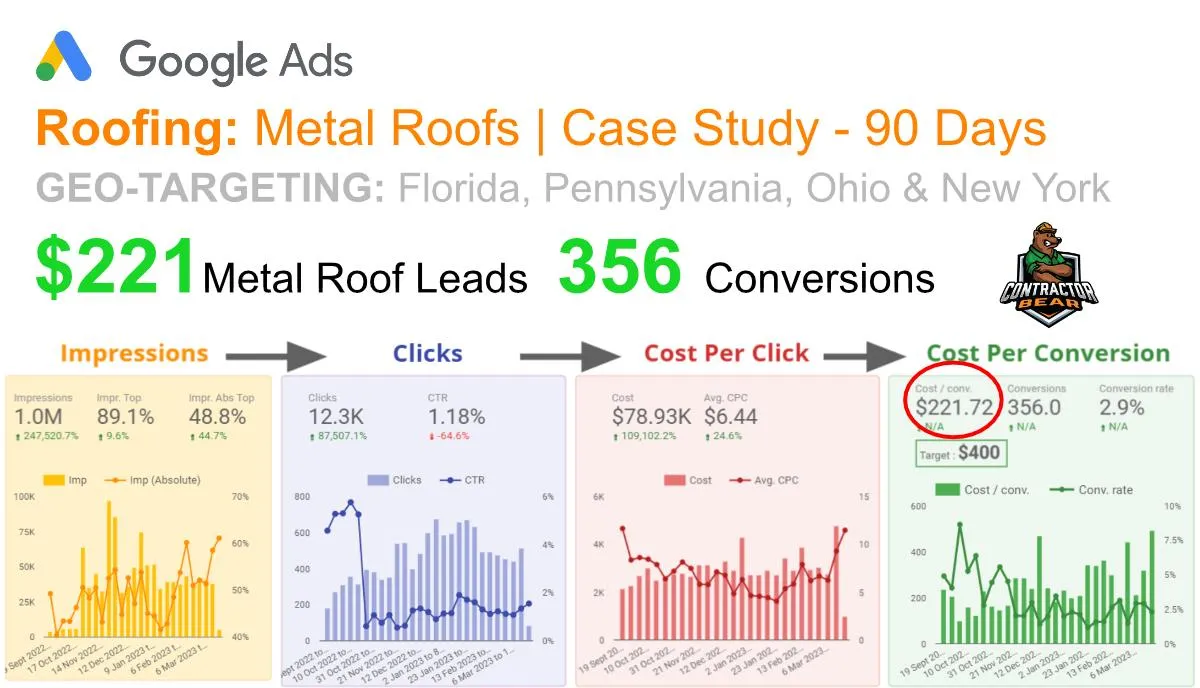
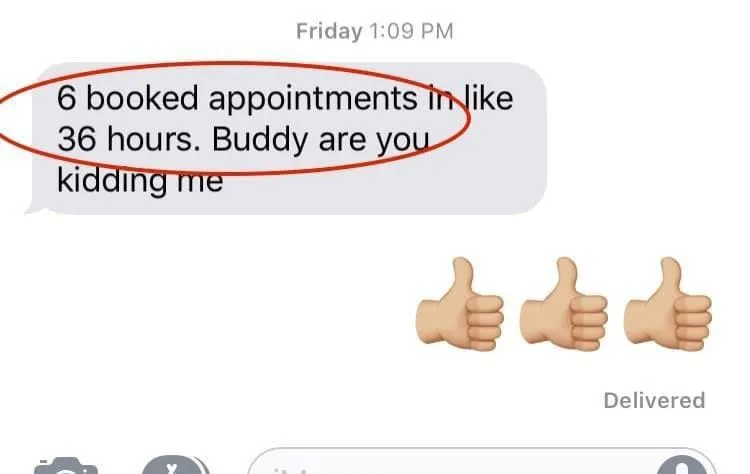
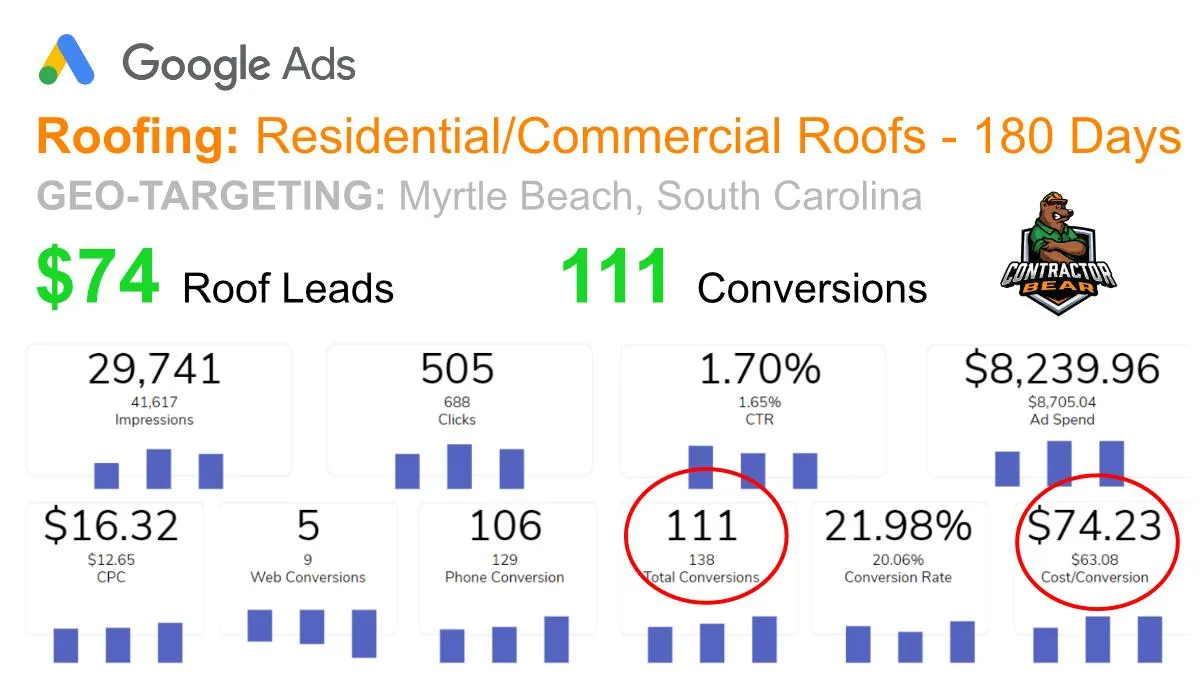
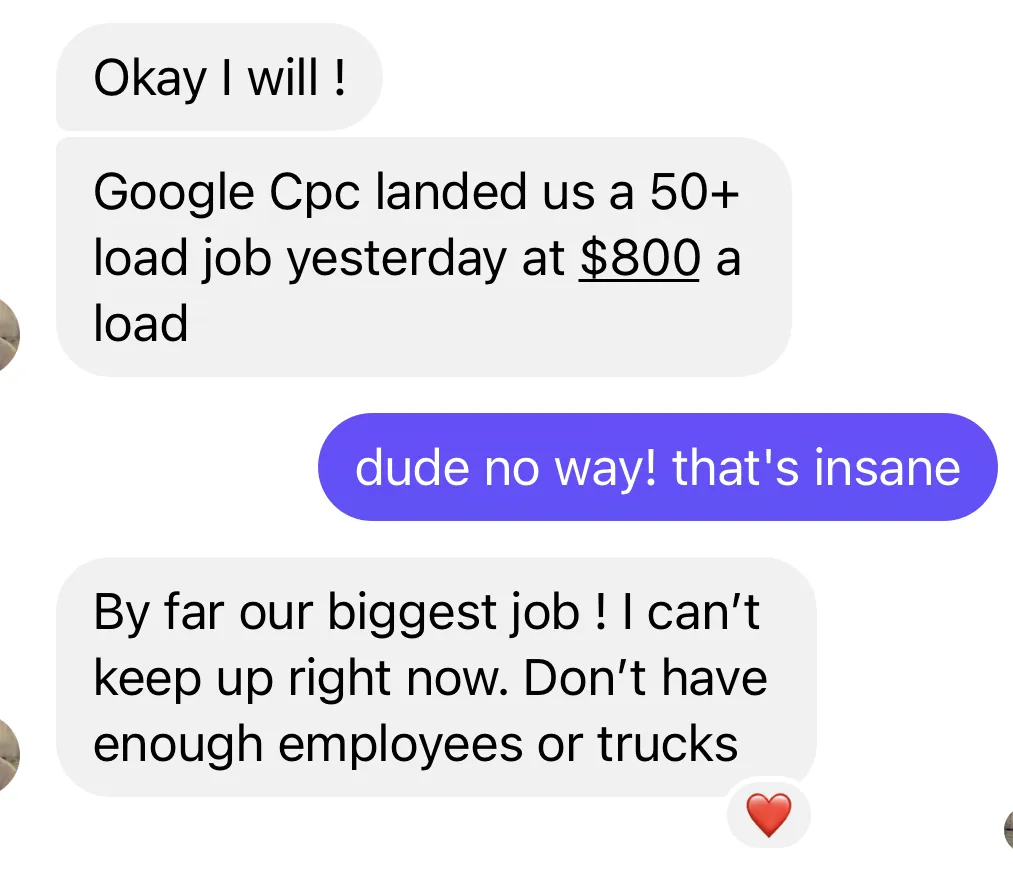
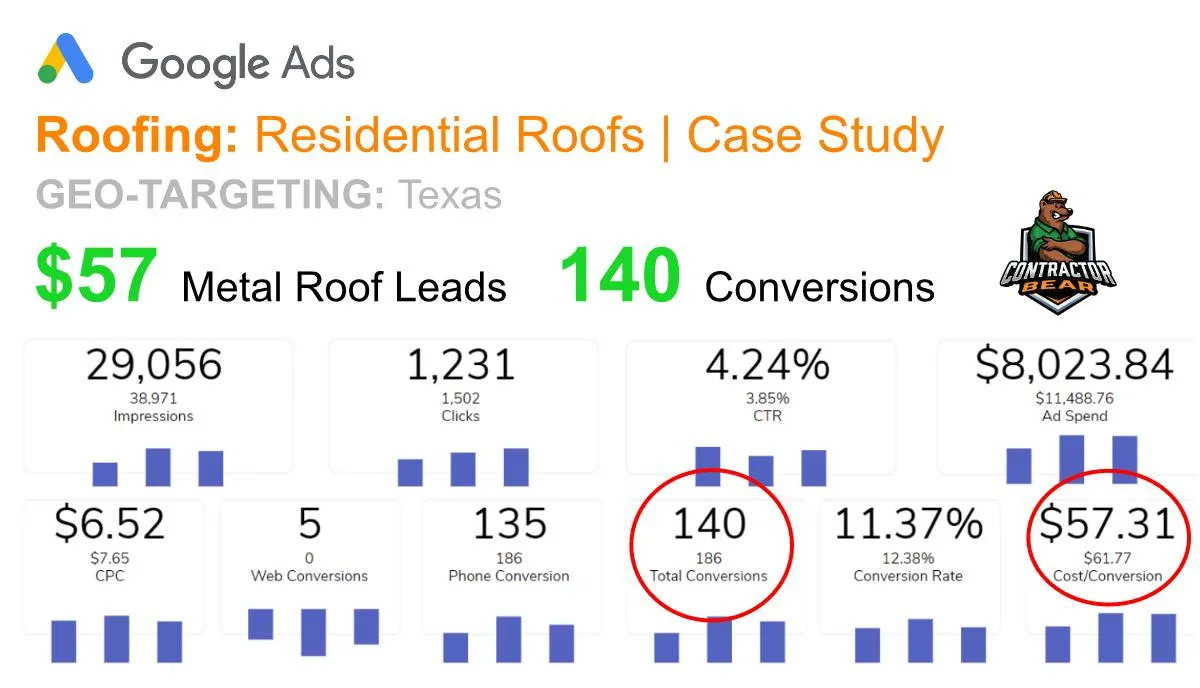
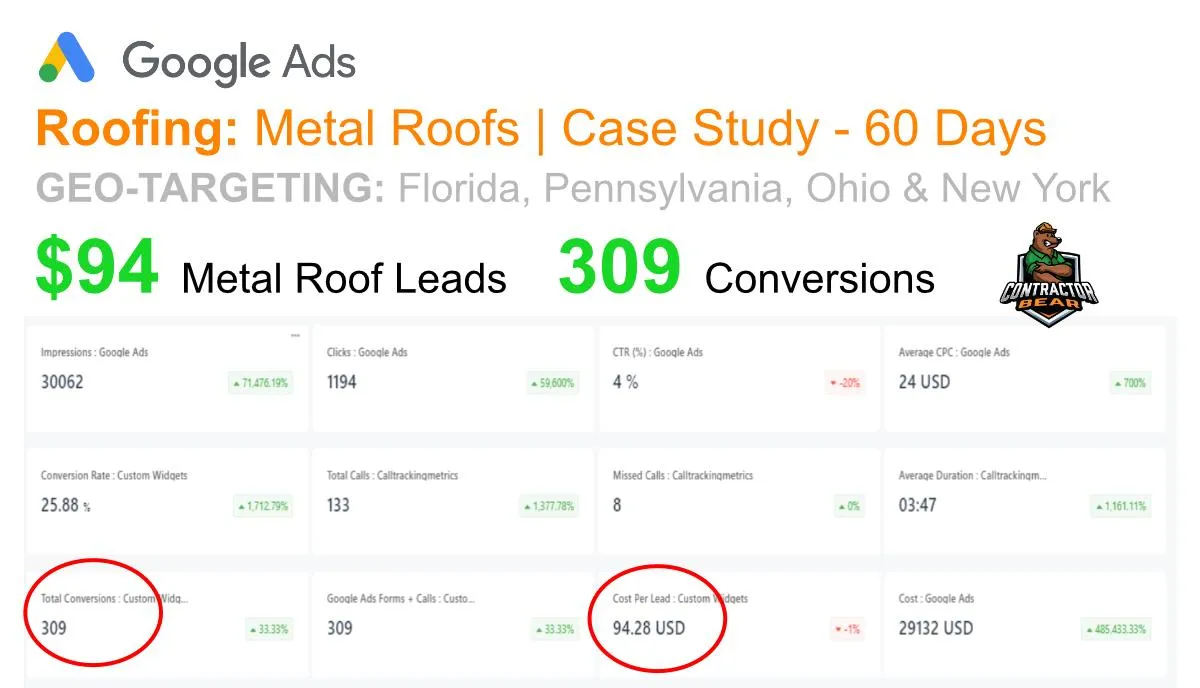
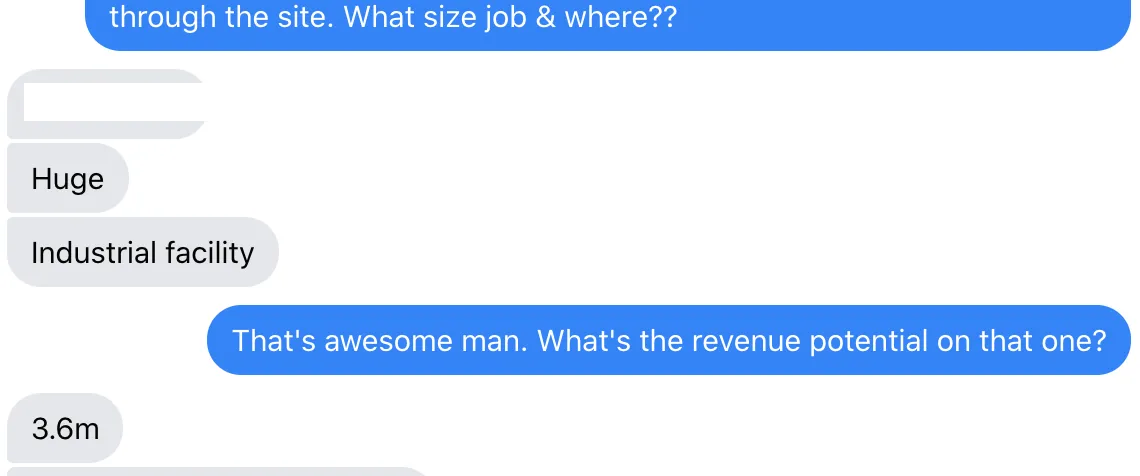
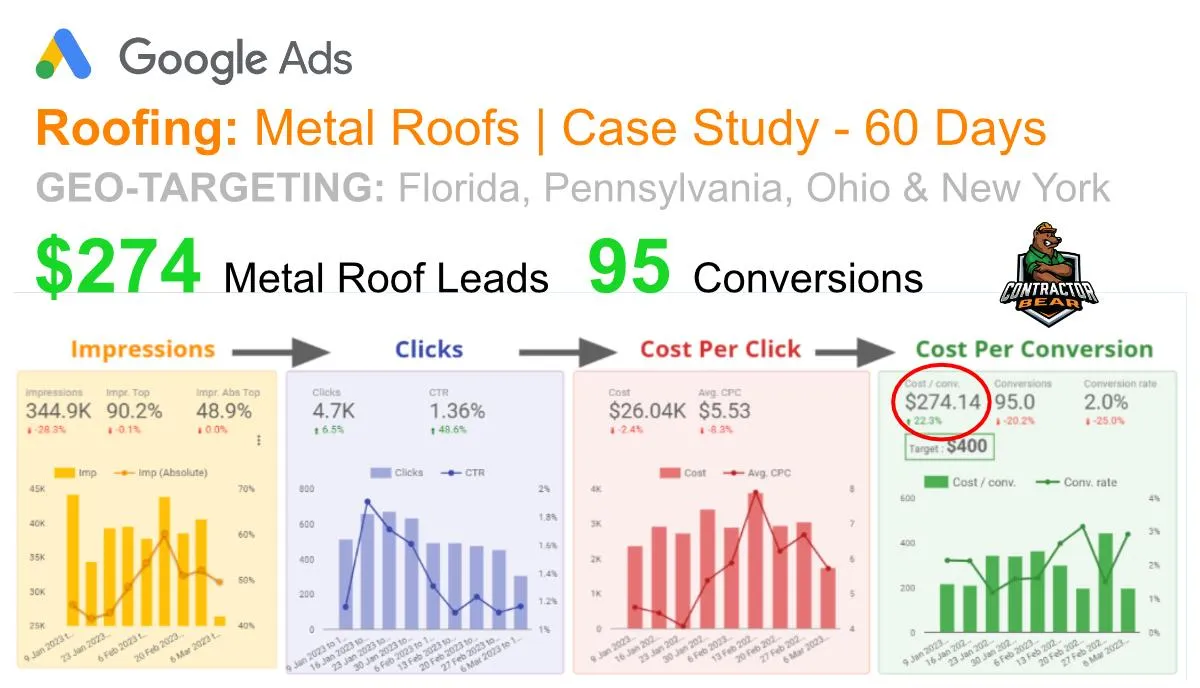
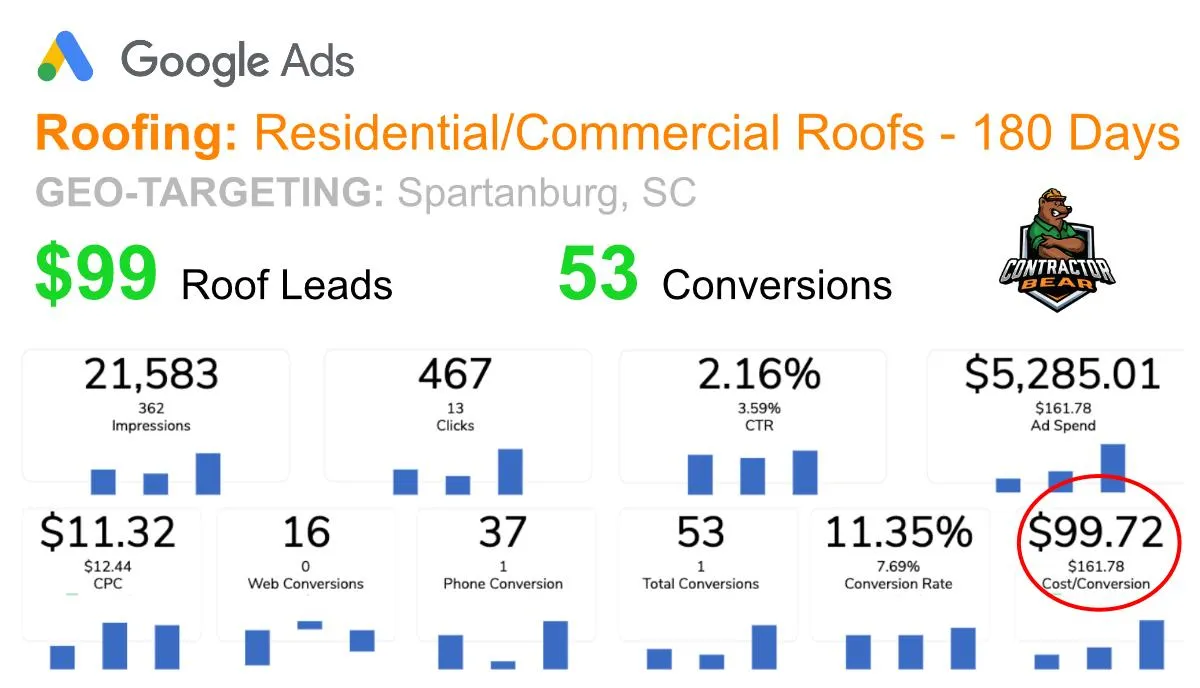
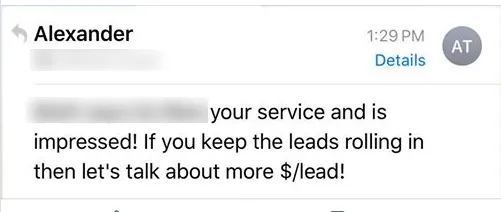
Real Results. Real Contractors.
Screenshots from our actual client dashboards and conversations. No stock photos, no fake numbers.


Packages for Washington Heating & Cooling Companies
Free custom website included with every plan. No setup fees, no long-term contracts.

Cub
Start building pipeline
- Google Business Profile optimization
- Local SEO foundation
- Review generation system
- Bring your own website

Black
Your free website tier
- FREE custom website
- ALL Everything in Cub, plus:
- Conversion-optimized site
- Call tracking + Growth Hub CRM

Grizzly
Accelerate your pipeline
- ALL Everything in Black, plus:
- Content marketing & blog
- Advanced review management
- City + service landing pages

Polar
Own your market
- ALL Everything in Grizzly, plus:
- Google Ads management
- Full-funnel lead nurturing
- Dedicated account manager
You only move up when we deliver. Tier upgrades trigger automatically when your attributed-lead count clears each threshold, with phone, email, and text notification before any price change. Attribution is limited to leads generated by our marketing — never your existing customers, referrals, or word-of-mouth.
Heating & Cooling SEO FAQ
How long does HVAC SEO take to produce results in Washington DC?
In Washington DC's competitive HVAC market, expect a realistic timeline of 3-6 months for initial meaningful rankings and 6-12 months for strong Map Pack and first-page organic positions on high-volume commercial keywords. Suburban markets like Arlington, Bethesda, and Fairfax typically move faster — 3-5 months — due to lower competition. The timeline depends heavily on your starting position: a company with an existing website, some reviews, and basic citation presence will see results faster than one starting from scratch. The good news is that results compound — rankings earned at month 6 continue generating leads at month 18 without additional cost per lead.
How much should a Washington DC heating and cooling company budget for SEO?
Effective local SEO in the DC metro market typically requires $1,500-3,500 per month for an HVAC company competing across DC and its suburbs. This covers GBP management, on-page optimization, citation building, content creation, review management, and link building. Context for that investment: a single AC installation in DC averages $4,500-8,000 in revenue with a $4,500 customer lifetime value. If SEO generates 15-20 leads per month at a 20% close rate, that is 3-4 new customers monthly — enough to return the entire SEO investment multiple times over from a single month's leads. Budget-tier SEO at $500-800/month exists but rarely moves the needle in competitive markets like DC.
What HVAC keywords should we be targeting in Washington DC?
Your Washington DC HVAC keyword strategy should span three tiers. Emergency/transactional keywords drive highest-intent calls: 'AC repair Washington DC,' 'furnace not working DC,' 'HVAC emergency service Arlington VA.' Service + location keywords drive installation leads: 'AC installation Washington DC,' 'heat pump installation Bethesda,' 'ductwork replacement Northern Virginia.' Informational keywords capture early-stage researchers: 'HVAC maintenance checklist DC,' 'best heat pump for DC climate,' 'PEPCO AC rebates 2025.' Target all three tiers simultaneously — emergency keywords are competitive but highest revenue, while informational keywords are easier to rank for and build brand authority with future buyers.
Can we rank in Washington DC if we are based in a suburb like Rockville or Alexandria?
Absolutely — and in some cases, a suburban base is an advantage. Google ranks businesses based on proximity to searcher and relevance to the query, not just business address. An Alexandria-based HVAC company can rank in DC searches if they properly set GBP service areas to include DC, build DC-specific content, and earn reviews from DC customers. The Map Pack shows results within the searcher's geography, so an Alexandria company appearing for 'HVAC repair' searches in Capitol Hill is entirely achievable. Many of the most successful DC-metro HVAC companies are headquartered in suburbs and serve the full metro through comprehensive service area optimization rather than maintaining expensive DC addresses.
What makes HVAC SEO in DC different from other cities?
Washington DC presents unique SEO challenges and opportunities that generic HVAC marketing agencies typically miss. The multi-jurisdictional metro (DC, Virginia, Maryland) means your SEO strategy must account for three state licensing environments and distinct local search markets. The dense row house stock in older DC neighborhoods creates unique service demand — older ductwork, space constraints for equipment, and historic district permit complications. DC's high-income, highly-educated homeowner base (median home value $675K) responds better to expertise-demonstrating content than price-focused messaging. Federal government schedules also affect seasonality — peak move-in periods around inauguration cycles and congressional recesses create predictable demand spikes unique to the DC market.
Heating & Cooling SEO in Nearby Cities
Heating & Cooling SEO in Alexandria →
Alexandria, VA • Pop. 160,530
Heating & Cooling SEO in Baltimore →
Baltimore, MD • Pop. 602,495
Heating & Cooling SEO in Richmond →
Richmond, VA • Pop. 226,610
Heating & Cooling SEO in Virginia Beach →
Virginia Beach, VA • Pop. 459,470
Heating & Cooling SEO in Hampton →
Hampton, VA • Pop. 136,454
Heating & Cooling SEO in Newport News →
Newport News, VA • Pop. 186,247
Heating & Cooling Marketing Resources
Scale Your Heating & Cooling Company →
Comprehensive growth guide for heating & cooling businesses.
All Heating & Cooling Services →
See everything we offer for heating & cooling companies.
Google Business Profile Guide for Contractors →
In-depth article to help grow your business.
How to Get More 5-Star Reviews →
Practical strategies you can implement today.
Get a Free Heating & Cooling SEO Audit for Washington
We'll show you exactly where you stand in DC-area rankings and map a clear path to first-page visibility — plus, every client gets a free custom website built to convert the organic traffic we drive.